
General Equine Medicine at the Ballarat Veterinary Practice
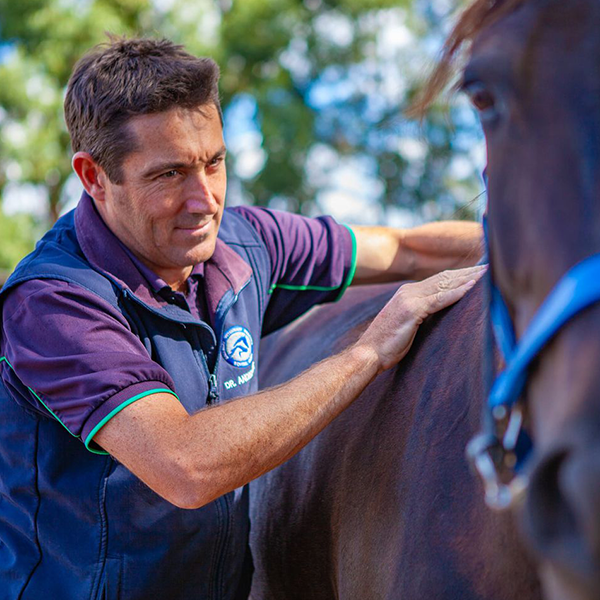
The Ballarat Veterinary Practice offers a comprehensive equine medical diagnostic and treatment service.
From disorders that require purely medical therapy, through to providing medical support for surgical cases, the clinic staff are experienced and well equipped to deal with all medical problems
Common medical issues include abdominal pathologies such as colic and diarrhoea, respiratory and cardiac problems, liver and kidney disorders, neurological, metabolic, hormonal and skin complaints.
Our diagnostic equipment is modern and of very high standard and is backed up by our clinic’s ability to offer an exceptional quality of round the clock intensive care for the sick patient.
Standard diagnostic procedures can include any of the following:
Pathology services
We have invested in the latest blood testing machines and the medical service has the ability to run a full haematology and biochemistry blood test in minutes during a consultation or emergency. We can also measure valuable supportive blood parameters such as arterial blood gas values, lactate and triglycerides in the clinic, and perform urinalysis. A twice daily courier service to the veterinary pathology laboratory in Melbourne ensures a rapid turn-around of results which need to be sent externally – for example processing of biopsies or faecal analysis.
Endoscopy
Our medicine service routinely provides endoscopy of the upper respiratory tract, the proximal digestive tract, the urethra and bladder and the rectum. We also offer exploratory laparoscopy (keyhole exploration of the abdomen) and biopsy for challenging cases. Endoscopy of the respiratory tract is supported by the ability to perform bronchoalveolar lavage (“lung wash”) which is an invaluable tool in the diagnosis of lower respiratory tract issues.
Ultrasonography
Experienced clinicians are available to perform ultrasonography of virtually any structure in the horse. Both external examinations – such as the abdomen and lung fields – and internal examinations via the rectum are offered (including ultrasound of the reproductive tract). Echocardiography (ultrasonography of the heart including evaluation of any cardiac abnormalities) is also offered.
Electrocardiography
Evaluation of any cardiac abnormality will involved assessment of the electrical activity of the heart, often before and after exercise. This is often combined with echocardiography (see ultrasonography).
Radiography
Our computed radiography system is often used in medical work-ups, from cervical vertebral radiographs (neck x-rays) for assessment of neurological cases, through to abdominal and thoracic radiographs
Rectal examination
The clinic provides secure facilities to enable us to perform rectal examinations on medical cases with minimal risk to both horse and handlers. Rectal examination plays a vital role in investigation of many abdominal disorders, such as colic and diarrhoea, as well as reproductive issues.
Biopsy
We can perform both standard biopsy of “lumps and bumps” and ultrasound guided biopsy of internal organs such as the liver or rectum. Such biopsies often provided invaluable information in the diagnosis of medical disorders.
Common medical investigations
Some of our more commonly performed investigations are outlined below.
Poor performance
A common complaint in both race and pleasure horses. If an orthopaedic condition has been ruled out, these horses are often presented for a thorough medical investigation. This will generally involved blood testing, careful auscultation (listening with the stethoscope) of the heart, respiratory tract and abdomen, followed by investigation as indicated. This commonly involves both endoscopy and ultrasonography of the internal organs to detect abnormalities.
Chronic colic
A common and frustrating complaint – this can include horses which continually display symptoms of low-grade discomfort or those who colic on a frequent basis. We are able to investigate this cases thoroughly, often requiring blood testing, ultrasonography, rectal examination and sampling as required. We are also able to provide ultrasound guided sampling of the peritoneal fluid (fluid within the abdomen) which can be very useful in the investigation of abdominal disorders.
Chronic diarrhoea
Many horses will suffer from diarrhoea and it can become extremely serious if not treated correctly. Uncontrollable weight loss or protein loss are common side effects of diarrhoea. We can offer a full work up of these cases, and initiate treatment as indicated.
Acute diarrhoea
“Colitis” is a serious, life-threatening condition characterized by an acutely sick horse, often accompanied by profuse watery diarrhoea. Any horse can suffer from this disorder and it can have many underlying causes. Prompt life-saving therapy is essential and the clinic is able to provide this is the form of high volume intravenous fluid therapy, hospitalization and the administration of therapy through the night.
Respiratory disorders
Many horses present to the clinic with a variety of respiratory issues such as making a noise while working, or a chronic cough or nasal discharge. Investigation of these cases typically involves blood testing, endoscopy and often a “lung wash” or sampling of fluid within the trachea. Targeted treatment can then be instigated based on accurate pathology results.
Chronic weight loss
A common complaint often with an underlying cause which requires further testing to discover. The clinic is well equipped to investigate these cases, from the straight-forward mouth examination (see “teeth”) through to more in depth procedures such as ultrasonography and rectal biopsy.
Endocrine (hormonal disorders including Cushings disease)
These diseases are more common in the general horse population than often assumed and can easily be confused with “normal” observations. For example, obese horses which founder easily may well be suffering from insulin resistance, while those older ponies with excessive hair growth and weight loss may be suffering from cushings disease. We are able to perform the necessary testing for these disorders and also advise on the most up to date treatment protocols as required.
Equine Emergency?
If you have an AFTER HOURS EMERGENCY between the hours of 6pm and 8am only please call us at this number.
Equine Emergency Number